ESAFF Pushes for Farmer-Centred Climate Action as EAC Validates Regional Climate Change Strategy 2026–2036
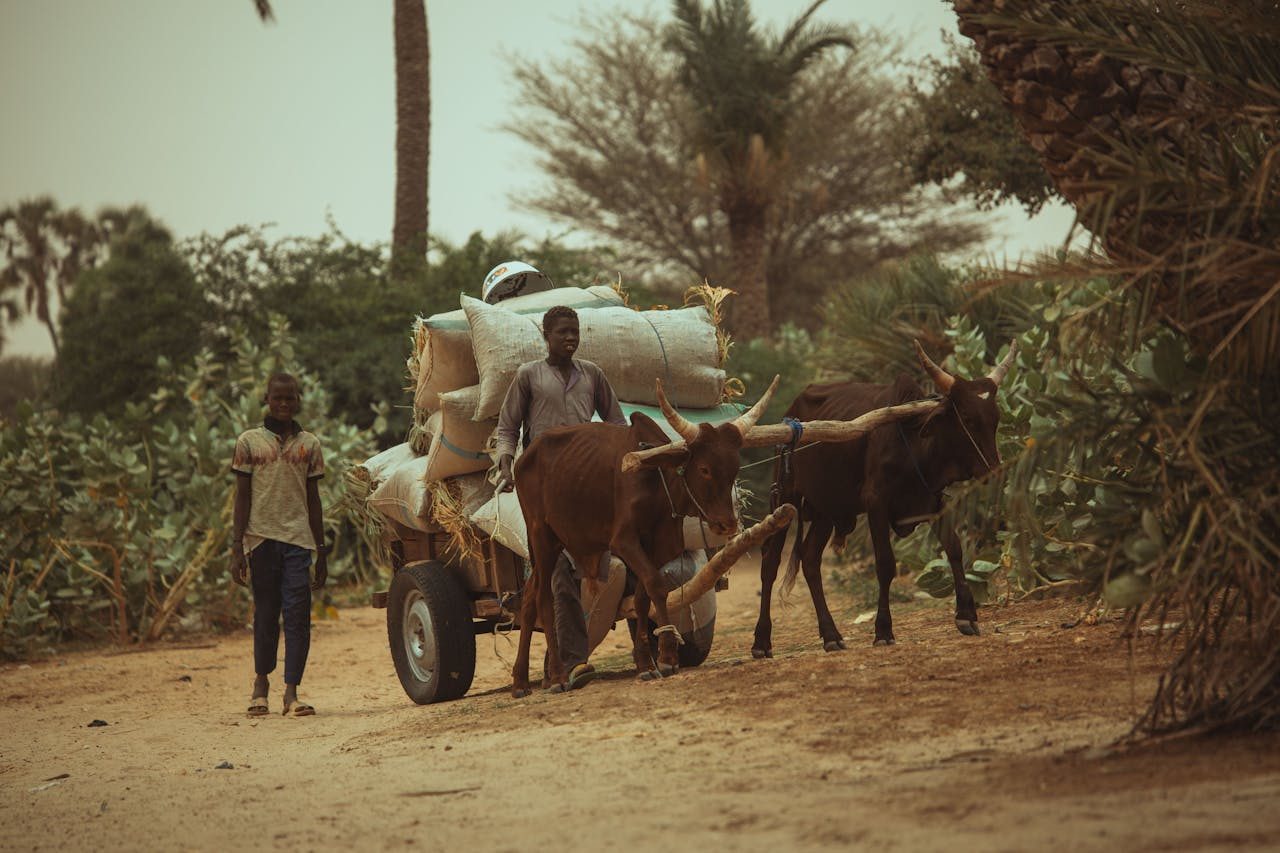
Machakos, Kenya. October 2026, As climate change continues to threaten agricultural productivity, food security and rural livelihoods across East Africa, the Eastern and Southern Africa Small-Scale Farmers Forum (ESAFF) has called for stronger recognition of smallholder farmers’ priorities in regional climate policies, financing and implementation frameworks.
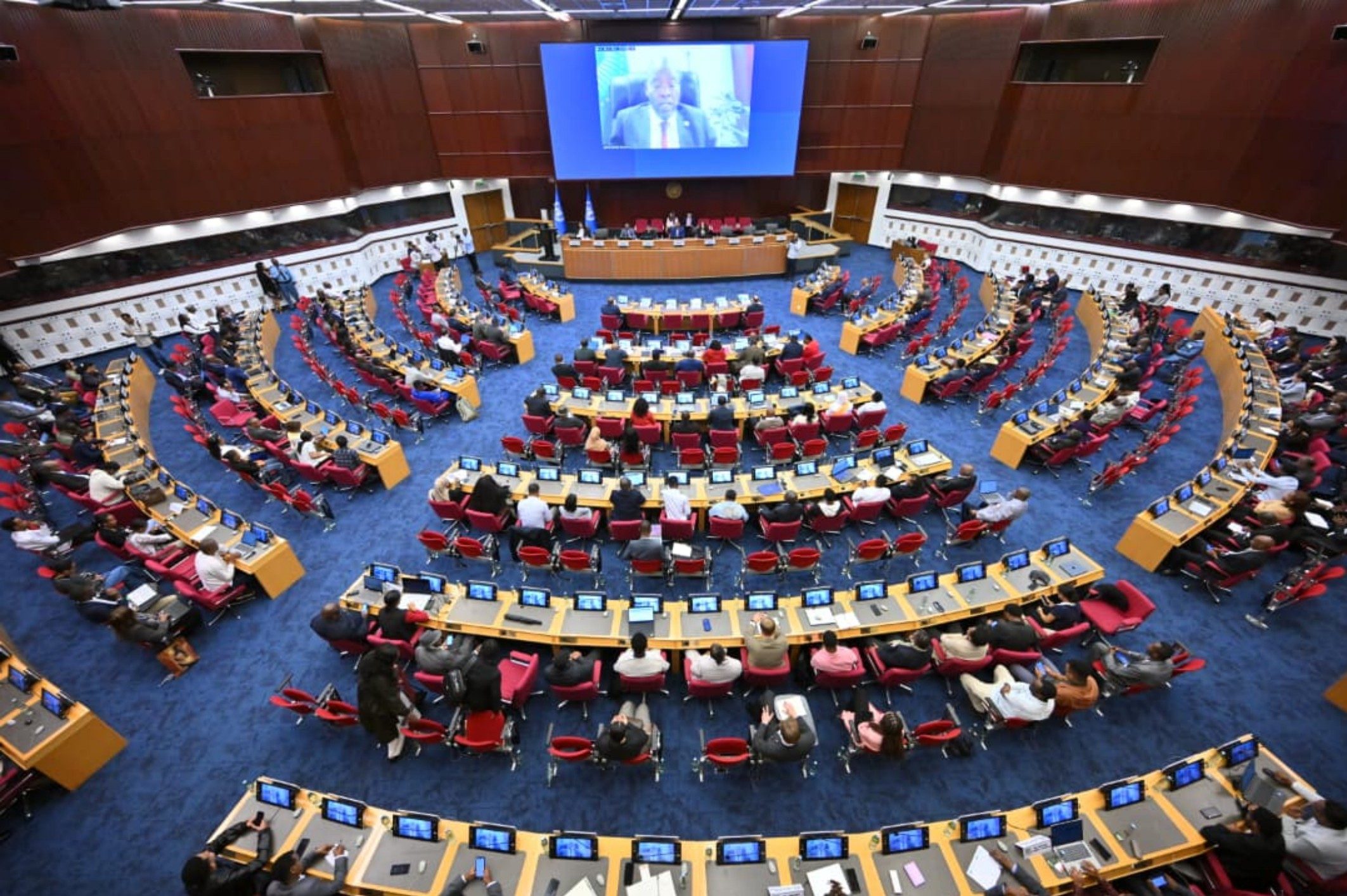
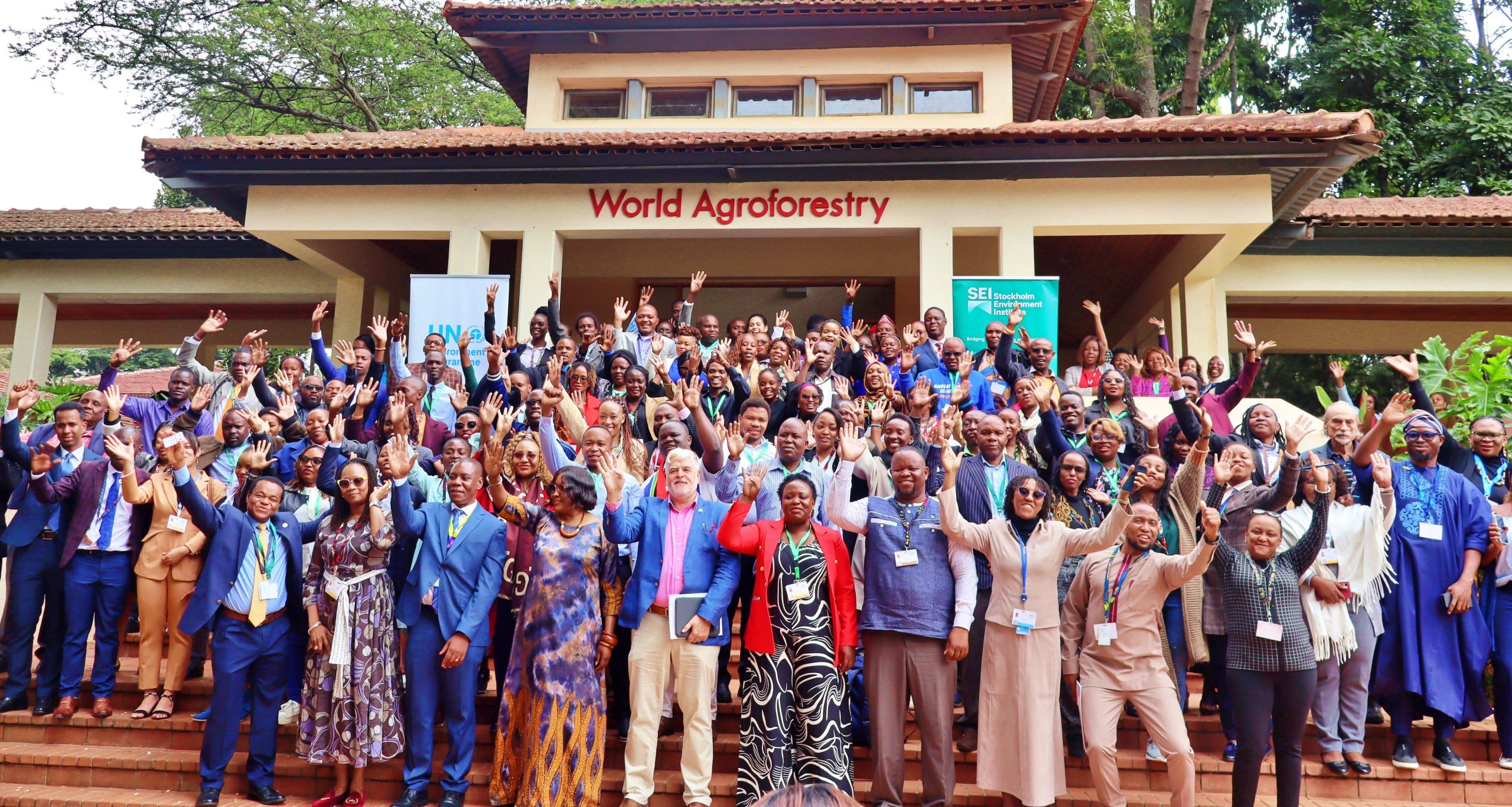
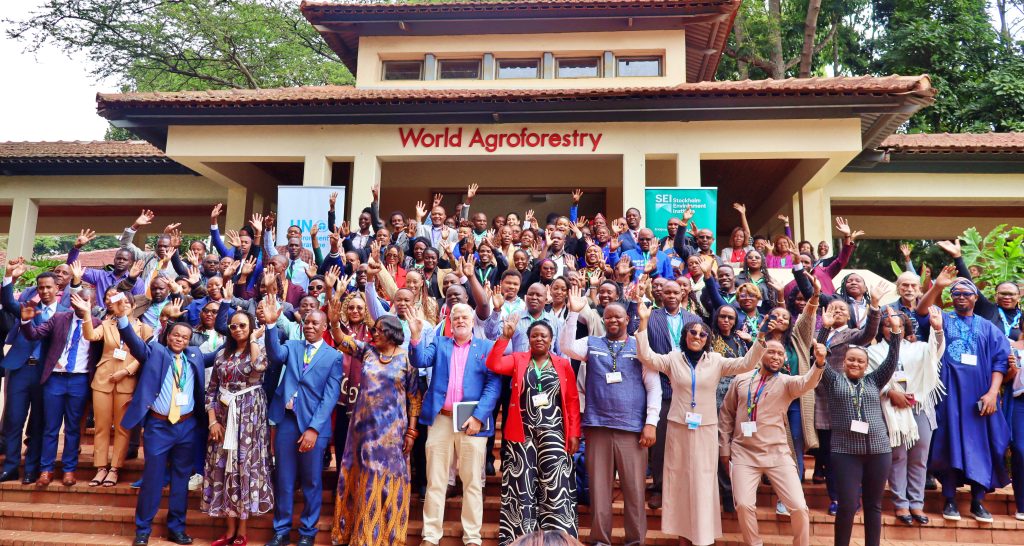
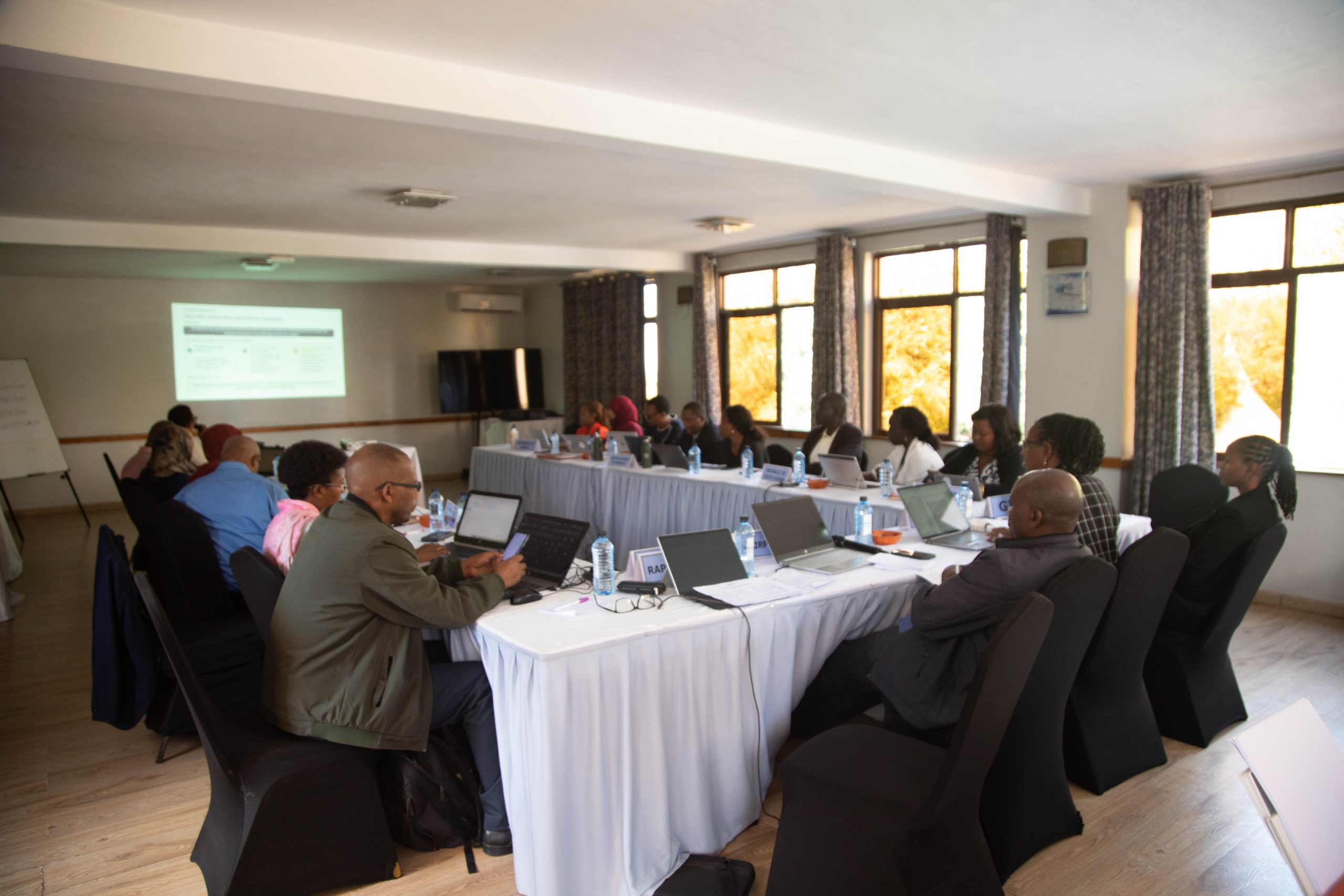
ESAFF joined representatives of East African Community (EAC) Partner States and the EAC Secretariat during the Regional Validation Meeting of the EAC Climate Change Strategy and Action Plan 2026–2036, held from 29 September to 2 October 2026 in Machakos, Kenya.
The meeting provided an important platform for reviewing and validating the regional framework, which seeks to strengthen coordinated climate action across Partner States, including climate adaptation, mitigation, finance, technology development, capacity building and institutional coordination.
Although ESAFF participated as an observer, the Forum had the opportunity to contribute to technical discussions and present recommendations aimed at ensuring that the Strategy responds to the realities, needs and priorities of smallholder farmers.
Putting smallholder farmers at the centre of climate action
ESAFF’s engagement built on the EAC Farmers’ Regional Dialogue on Climate Change, convened virtually on 21 September 2026, which brought together farmers, farmer organisations, policymakers and other stakeholders to discuss the draft Strategy and develop recommendations for regional climate action and UNFCCC COP31.
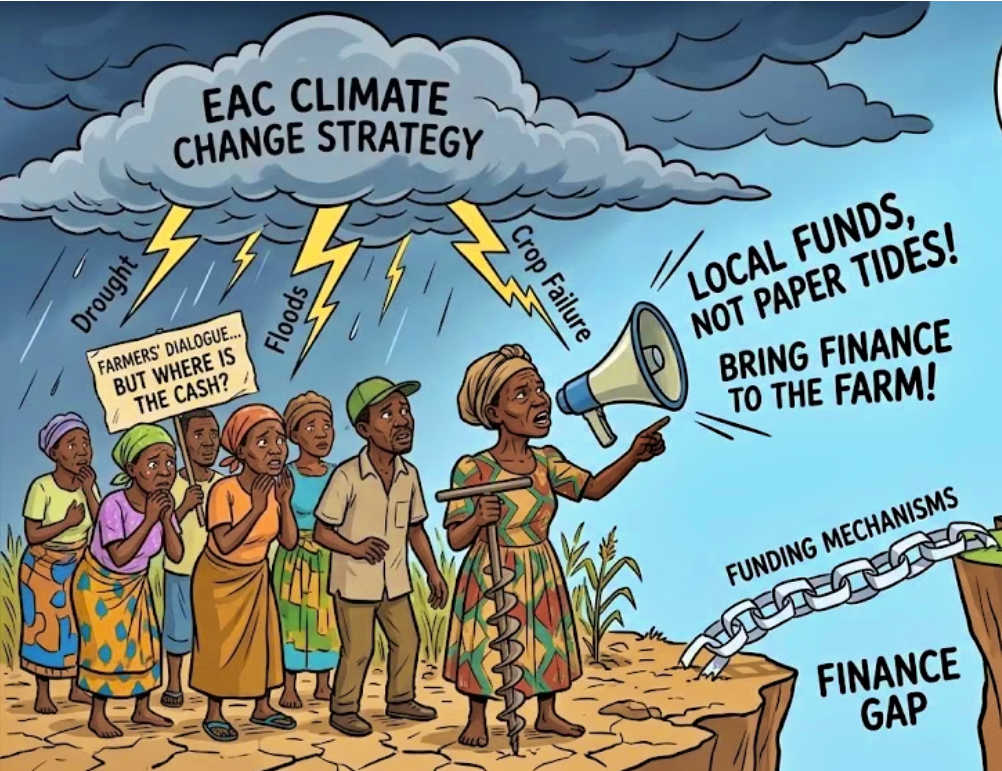
Through the dialogue, smallholder farmers and civil society organisations developed a joint position outlining 13 priority recommendations for strengthening the Strategy and its implementation.
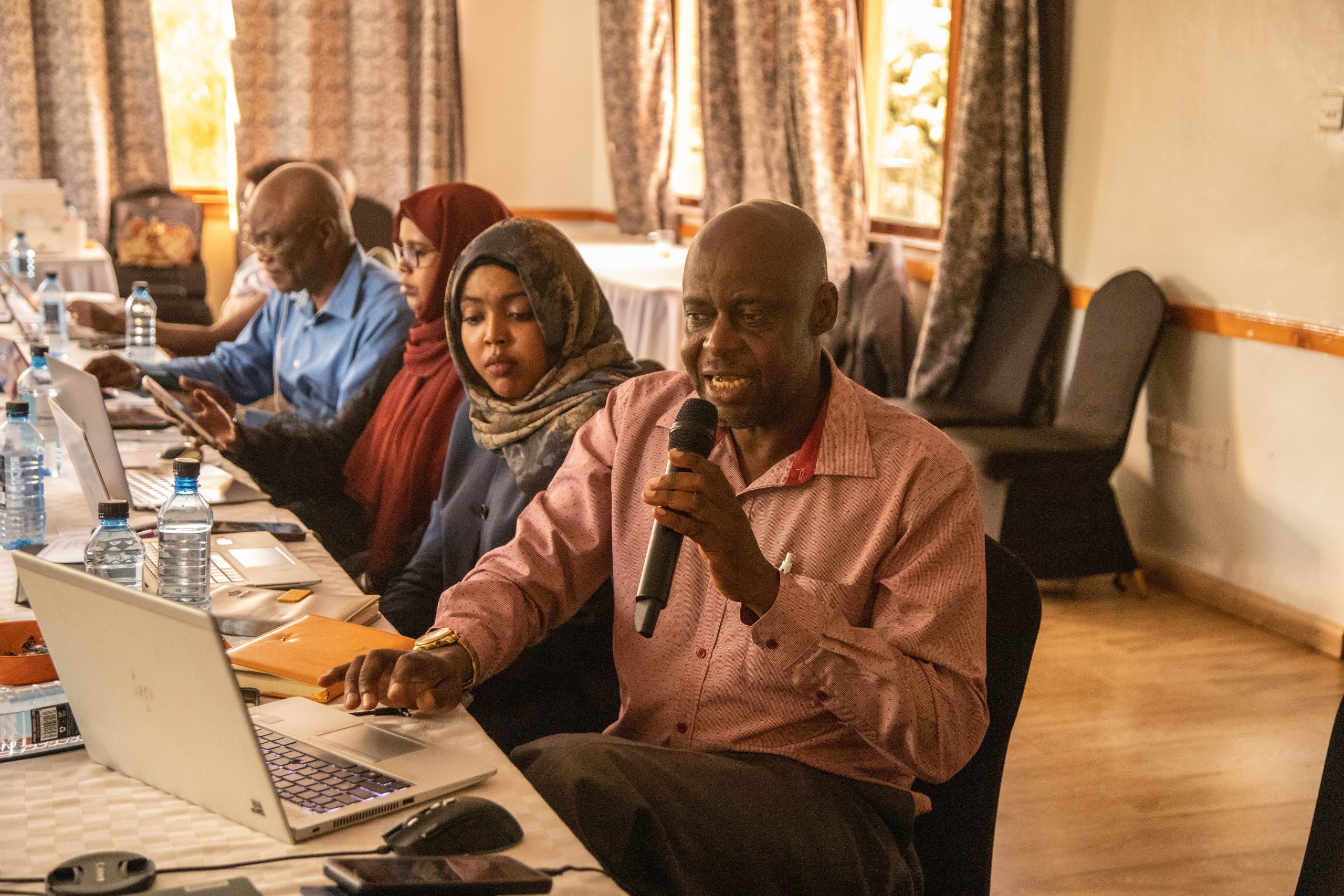
Presenting some of these priorities during the validation meeting, Mr. Hakim Baliraine, ESAFF representative, emphasised the importance of moving beyond recognising farmers as beneficiaries of climate interventions towards institutionalising their participation in climate governance, financing, implementation and monitoring.
“Smallholder farmers are already implementing climate solutions in their communities, yet they remain among the most affected by climate change and the least reached by climate finance. The EAC Strategy presents an opportunity to change this by ensuring farmers have a meaningful role in decision-making, access to resources, and the ability to monitor whether climate commitments are delivering results on the ground.”
ESAFF particularly called for stronger alignment of the Strategy with the CAADP Kampala Declaration and the EAC Regional Agri-food Systems Investment Plan, alongside increased investment in agroecology, locally led adaptation, farmer-managed seed systems and climate-resilient agriculture.
The Forum also emphasised the need to make climate finance accessible to farmer organisations and local communities, including through a dedicated locally led adaptation financing window under the proposed EAC Climate Change Fund.
Other recommendations included increased domestic budget allocations for climate adaptation, stronger last-mile early warning systems, a regional Loss and Damage Fund, safeguards for community land and resource rights in carbon-market initiatives, and farmer-led social accountability mechanisms to track climate financing and implementation.
ESAFF further proposed establishing an Annual EAC Smallholder Farmers’ Climate Dialogue, linked to relevant EAC technical and ministerial processes, to institutionalise farmers’ participation in regional climate governance and negotiations.
These priorities formed part of the joint position developed by smallholder farmers and civil society organisations ahead of the validation meeting.
Connecting regional climate priorities to COP31
The validation process also comes at a critical moment as EAC Partner States prepare to articulate regional priorities ahead of the 31st Conference of the Parties to the United Nations Framework Convention on Climate Change (UNFCCC COP31).
Reflecting on the importance of these processes, Ms. Diane Sibanda, Chairperson of ESAFF, underscored the need to ensure that smallholder farmers’ perspectives inform both regional policy development and international climate negotiations.
“These important regional processes are unfolding as East Africa prepares to articulate its priorities towards UNFCCC COP31, making this a timely opportunity to ensure that smallholder farmers’ and civil society voices, experiences and priorities are reflected in regional climate and agricultural policies and negotiations including COP31.”
She further highlighted the growing impacts of climate change on smallholder farmers and rural communities.
“For our farmers, climate change is already a daily reality. Unpredictable rainfall, prolonged droughts, floods, rising temperatures, pests and diseases are affecting production, incomes, food security and livelihoods.”
Her remarks reinforce ESAFF’s call for regional climate commitments to translate into practical interventions that strengthen farmers’ resilience, protect livelihoods and improve access to adaptation resources.
From policy commitments to implementation
A key outcome of ESAFF’s engagement was the acknowledgement during the validation process of recommendations emerging from the EAC Farmers’ Regional Dialogue, with the meeting facilitator confirming that inputs from farmers had been incorporated into the Strategy development process.
For ESAFF, this represents an important step towards strengthening the connection between grassroots experiences and regional climate policymaking.
However, the Forum maintains that the real measure of success will be how effectively the Strategy is implemented, financed and monitored at regional, national and community levels.
ESAFF will continue engaging with the EAC Secretariat, Partner States and development partners to advocate for adequate climate financing, meaningful farmer participation, stronger accountability and the integration of farmer-led solutions into regional climate and agricultural programmes.
As the EAC moves towards implementing its Climate Change Strategy and Action Plan 2026–2036, ESAFF reiterates that smallholder farmers must not only be recognised as beneficiaries of climate action, but also as knowledge holders, innovators, investors and decision-makers in building a climate-resilient East Africa.